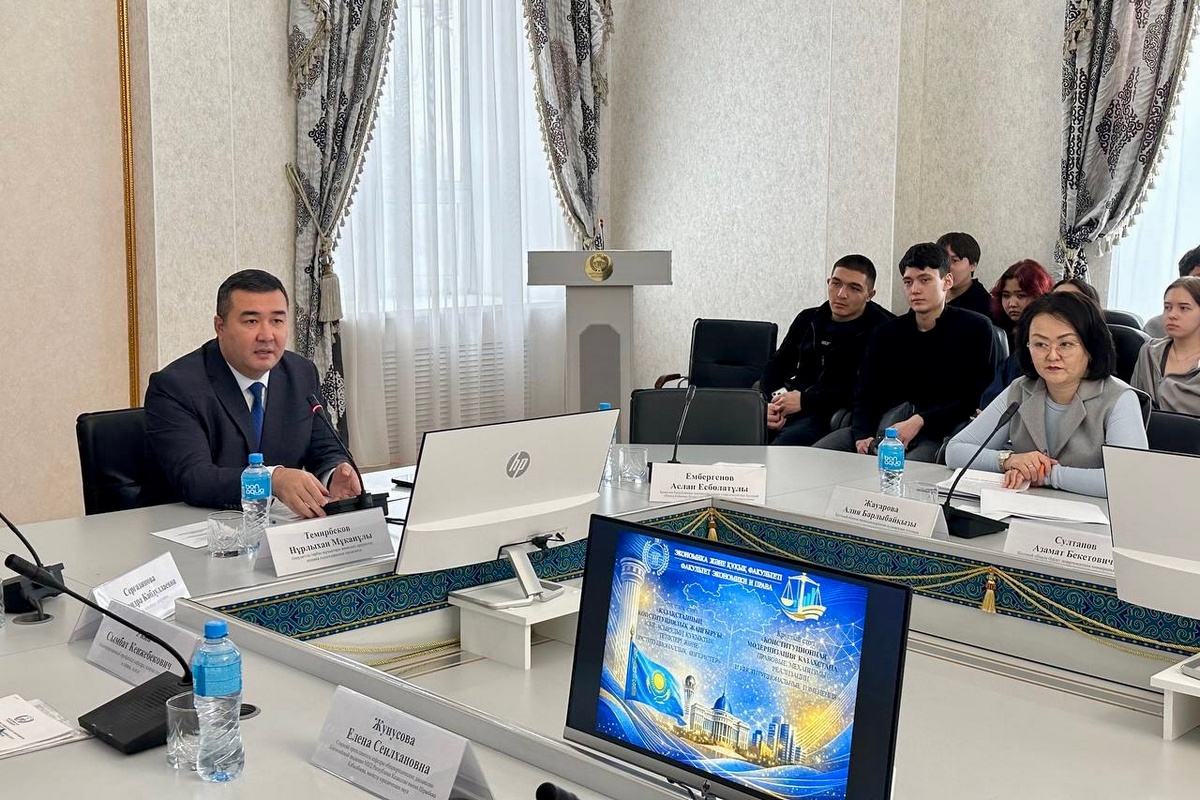
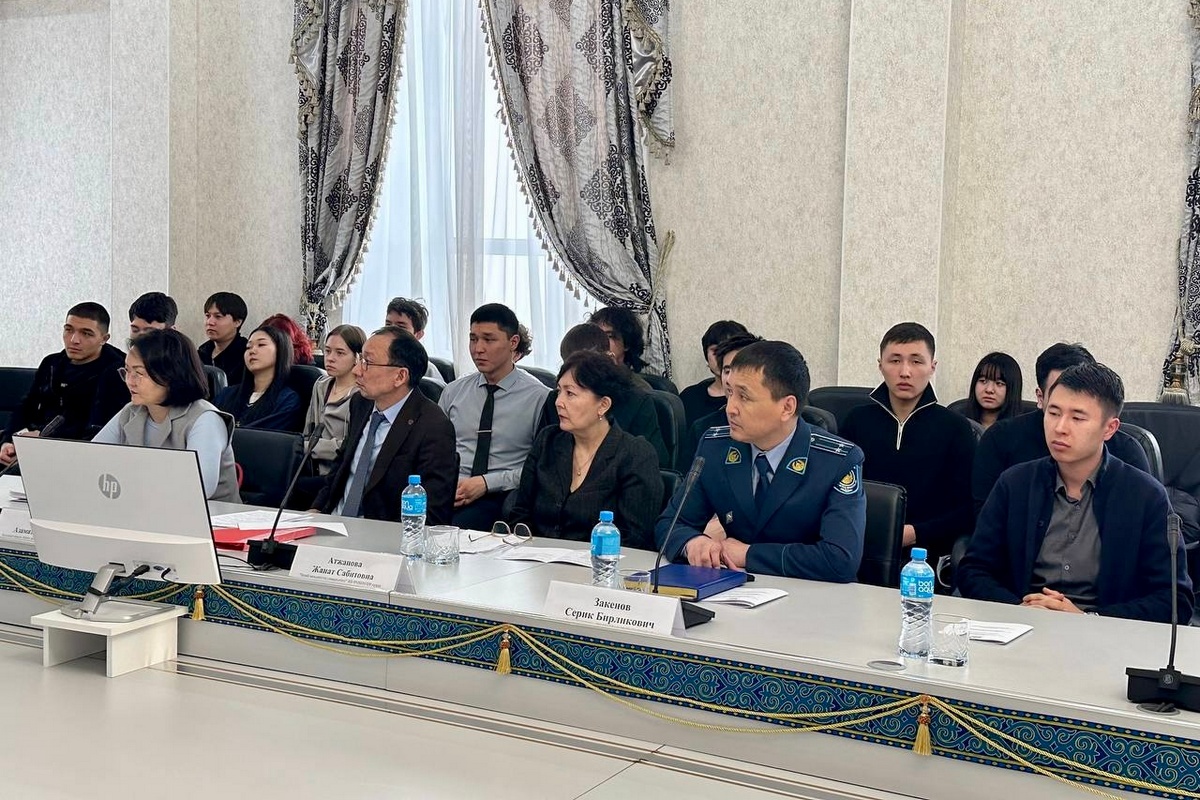
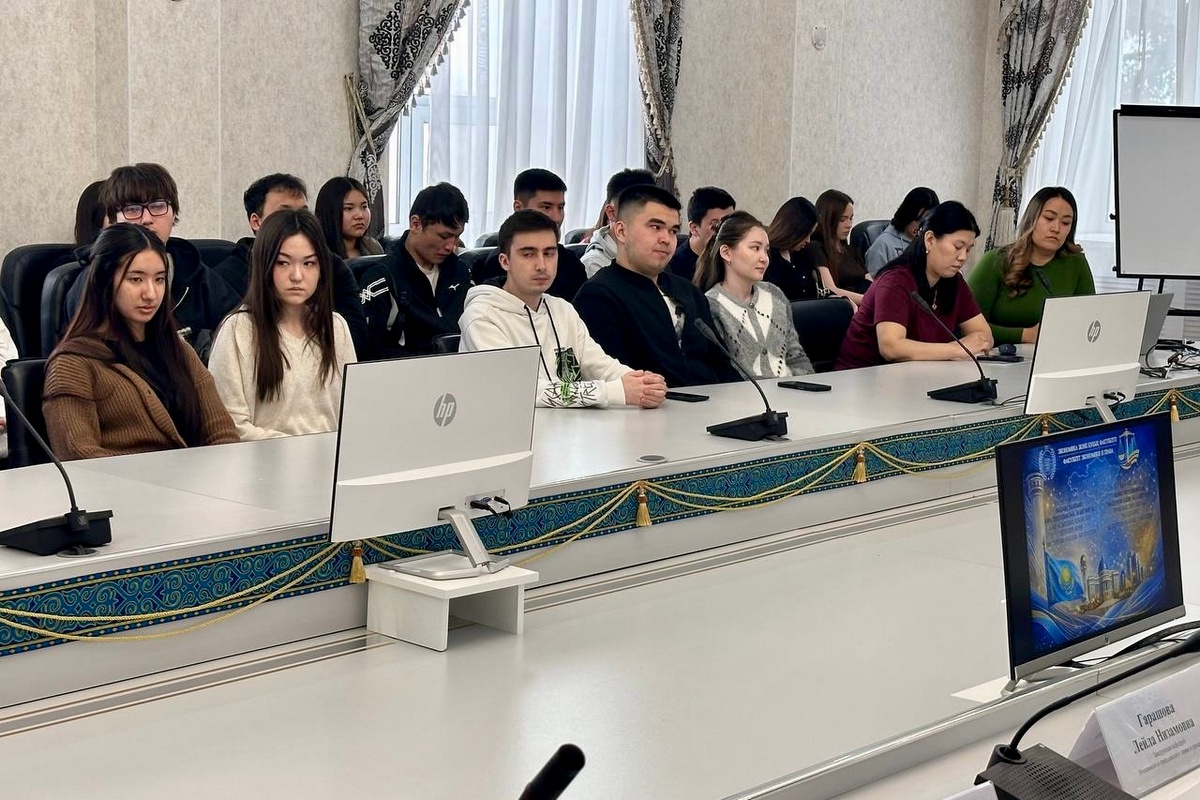
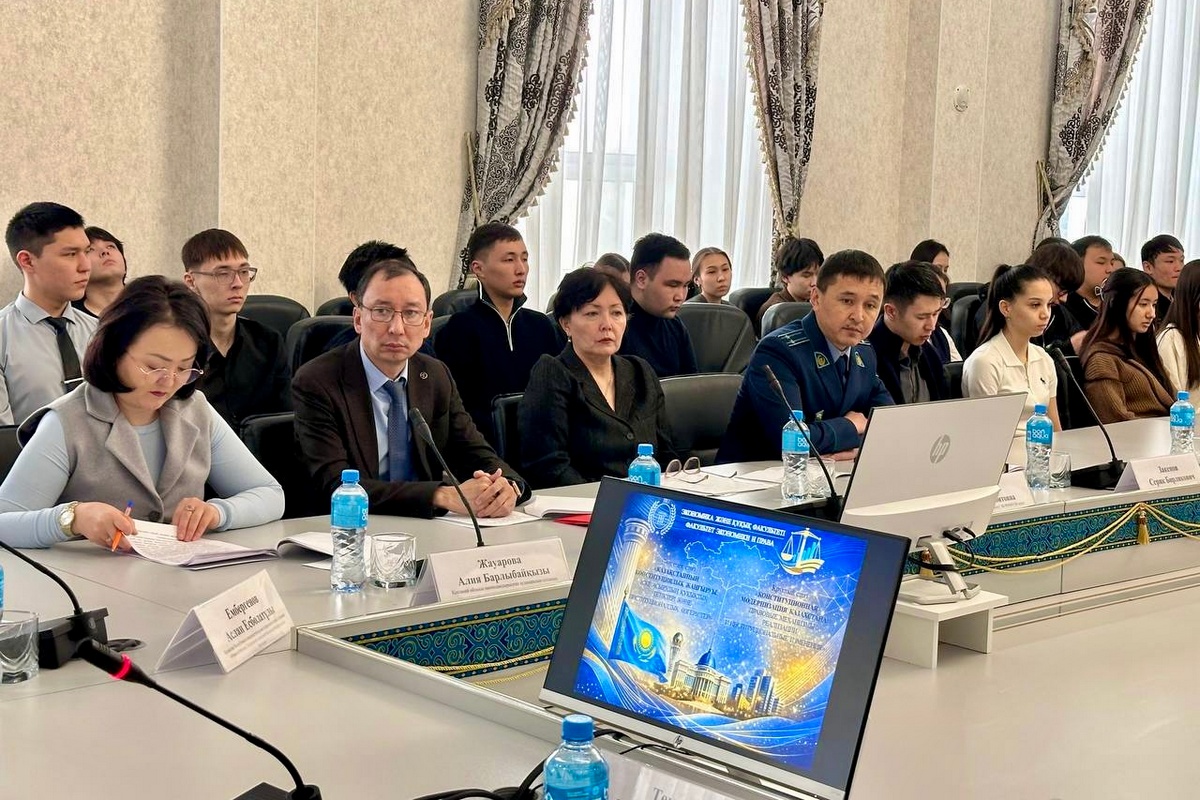
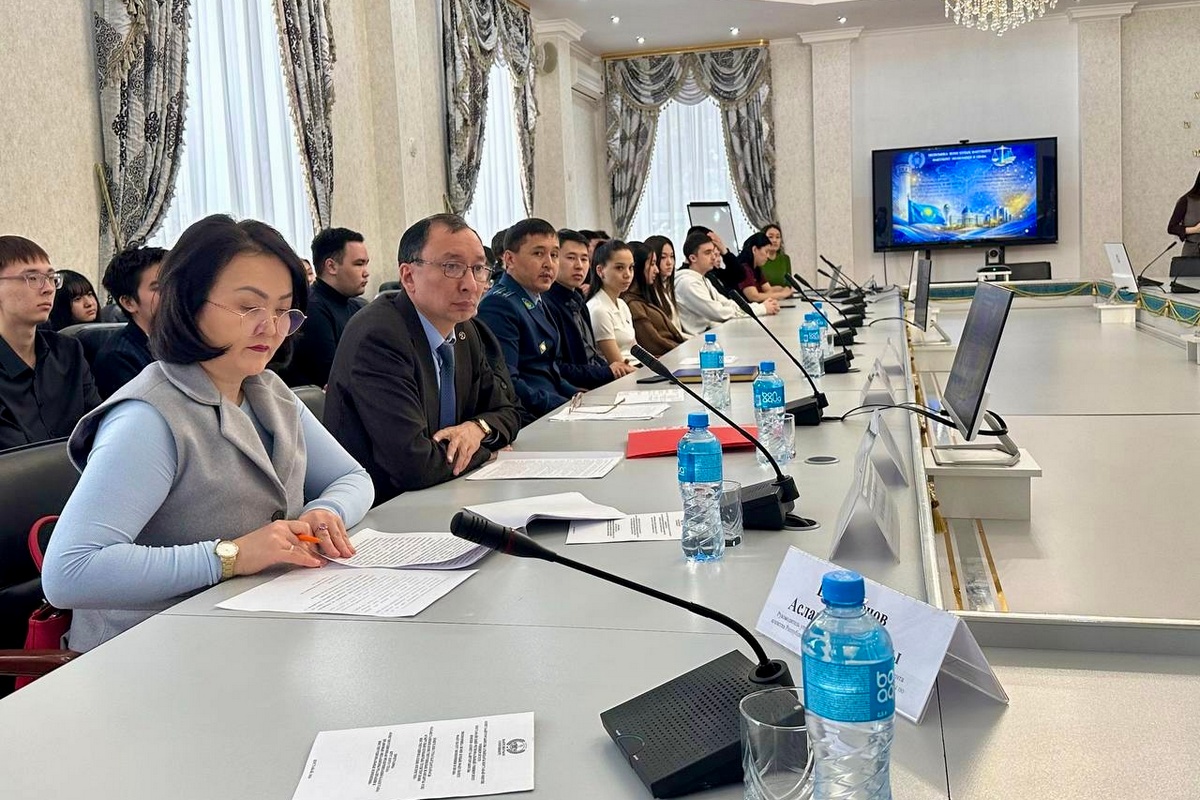
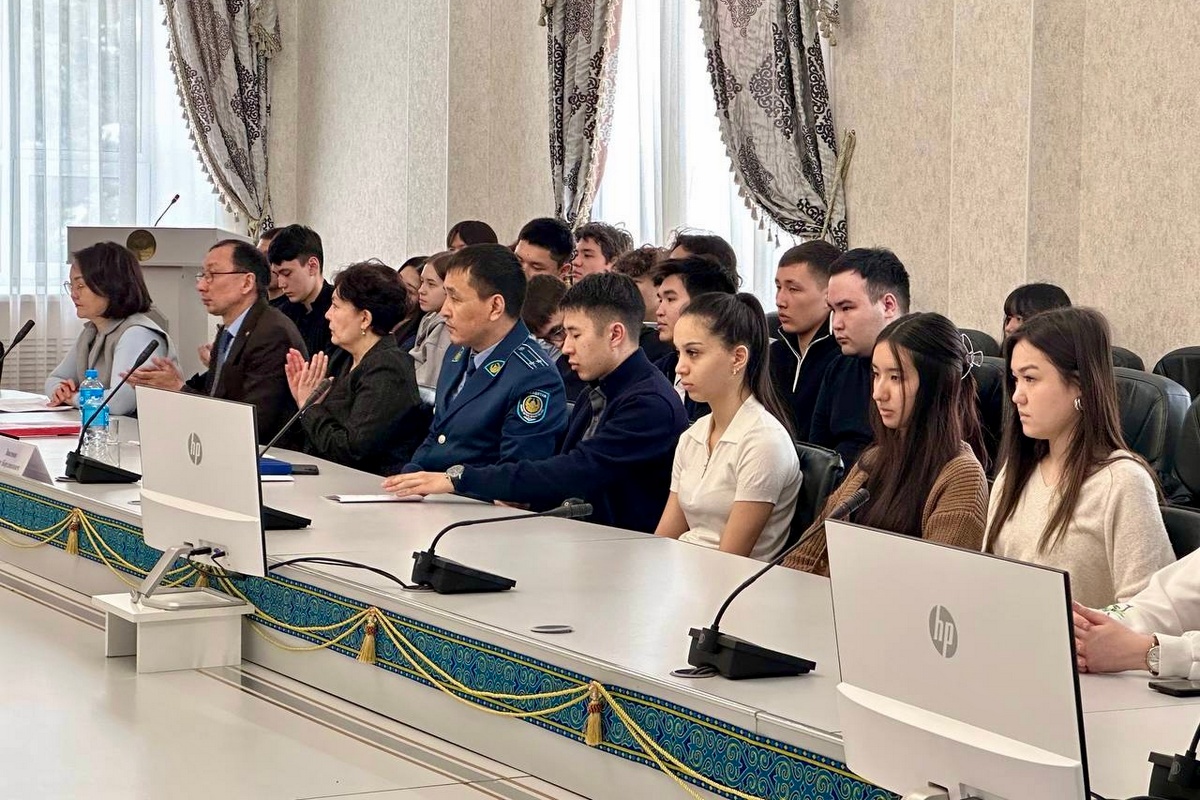
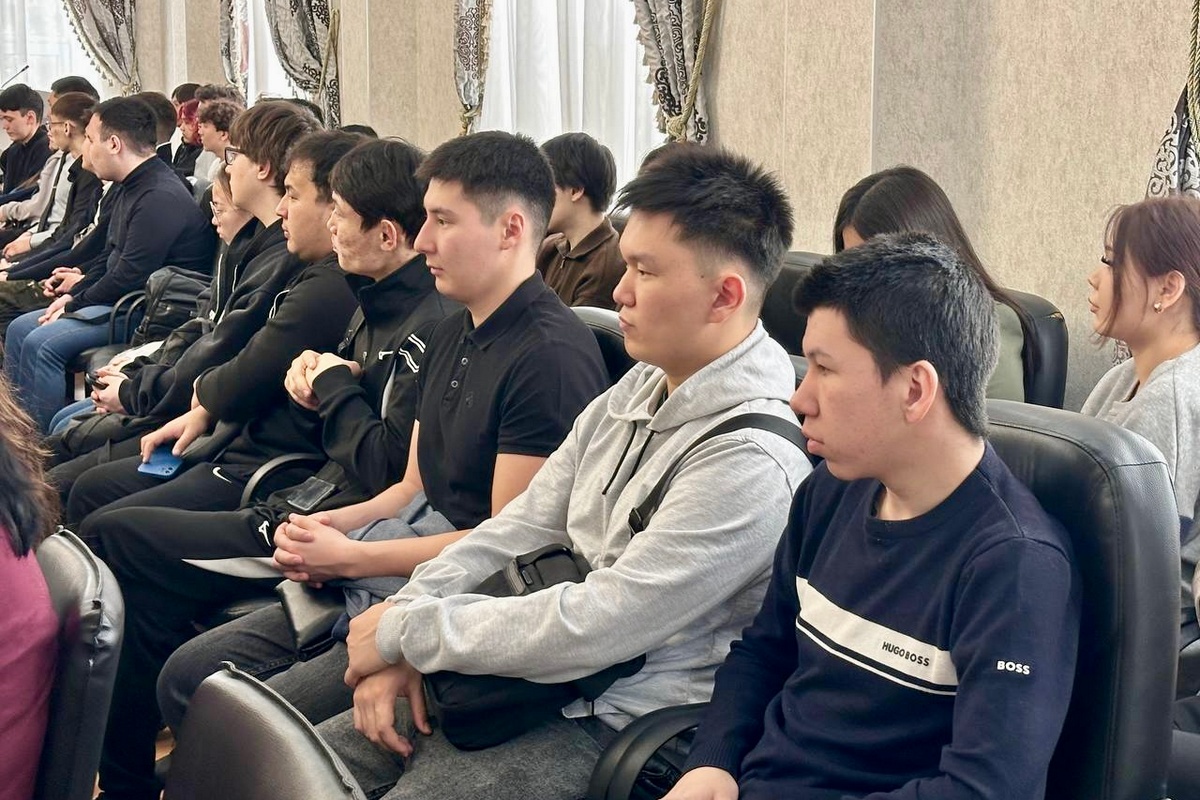
The dialogue platform brought together representatives of government agencies, faculty members of the Department of Theory of State and Law of the Faculty of Economics and Law at KRU, representatives of Kostanay universities, and students.
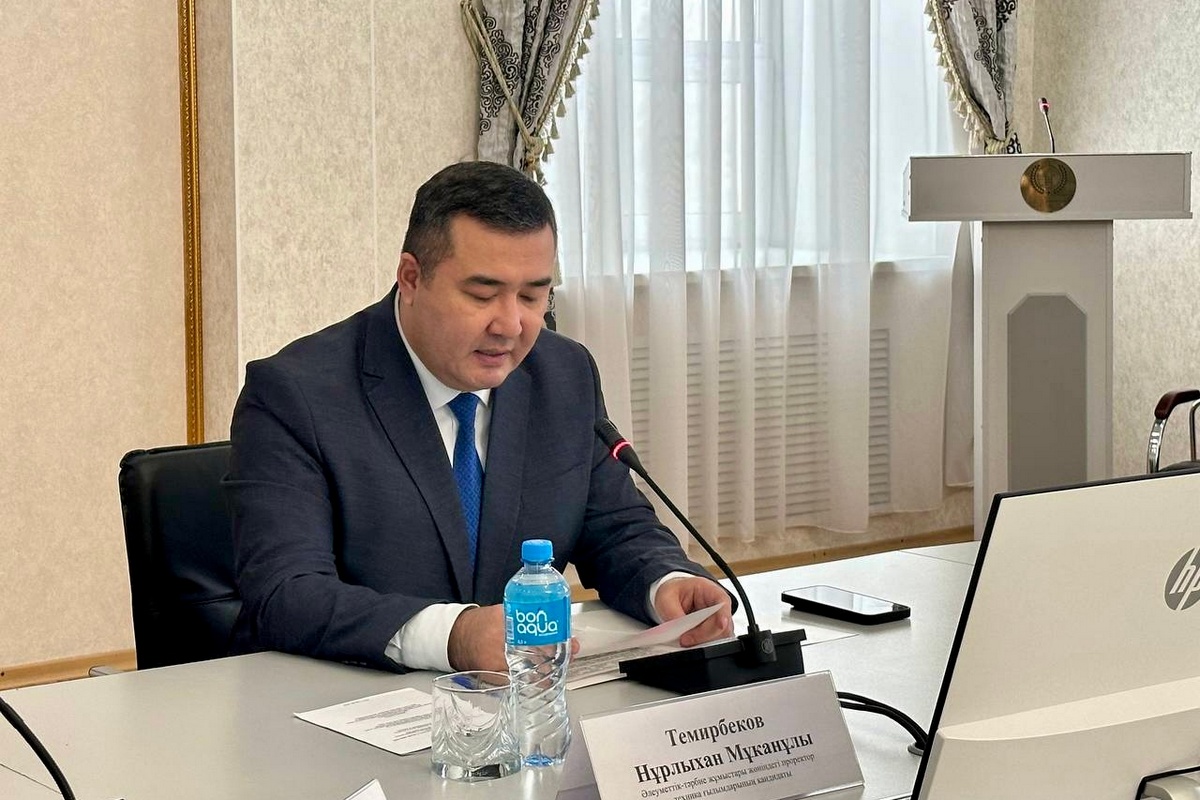
The event opened with welcoming remarks by Nurlykhan Temirbekov, Vice-Rector for Social and Educational Affairs at KRU. He emphasized that constitutional reform is not merely a legal process, but also a significant stage in societal development.
“The university environment must remain a space for open professional discussion and for fostering the legal culture of young people,” he noted.
Azamat Sultanov, Head of the Department for Control in the Field of Registration Services and Registration of Non-Profit Organizations of the Kostanay Region Department of Justice, presented an analysis of the key provisions of the draft Constitution.
He spoke about the expanded role of representative bodies, the strengthening of guarantees of human rights and freedoms, and the legal status of the legal profession. According to him, the proposed amendments are aimed at creating a more balanced political system.
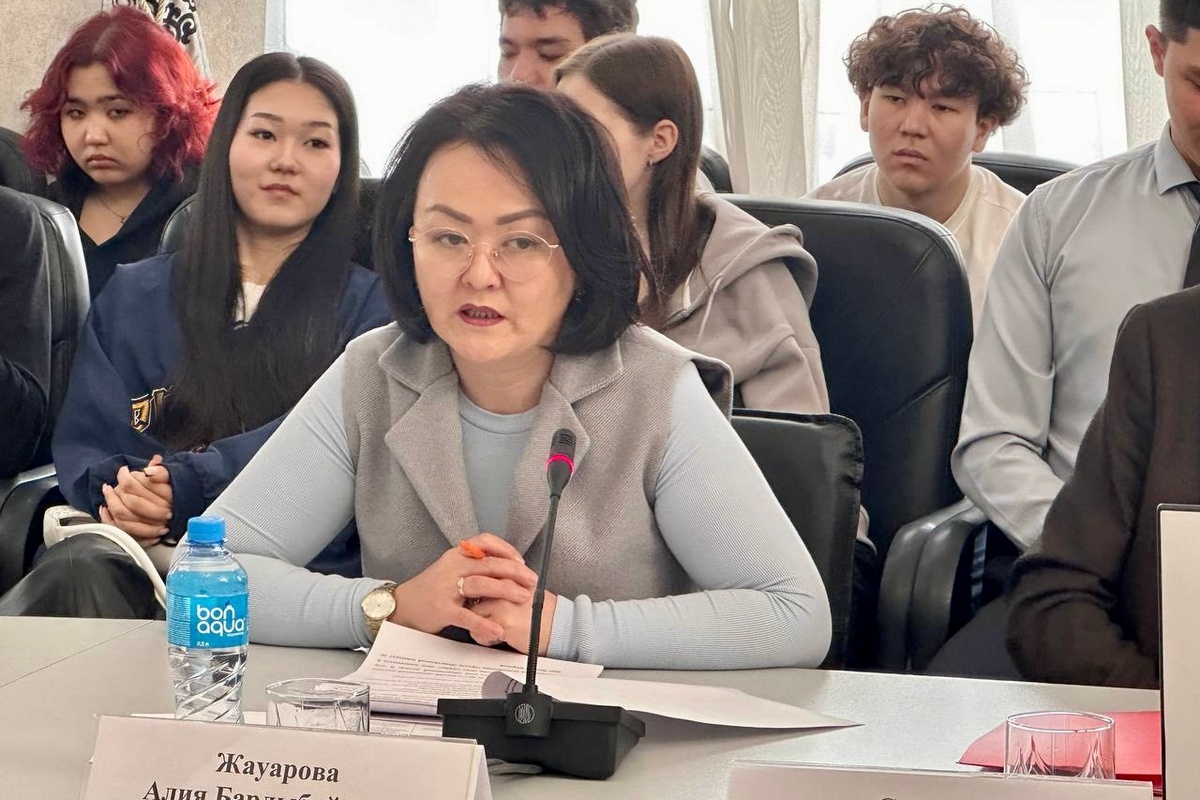
Aliya Zhauarova, Judge of the Specialized Interdistrict Court of the region, focused on the provisions of the new Constitution related to the protection of citizens’ electoral rights.
In her presentation, she outlined the role of the courts in ensuring the legality of the electoral process, described mechanisms for the prompt consideration of complaints, and reminded participants that from March 10 to March 20 the courts will operate without days off.
The speaker stressed that strengthening judicial guarantees is an essential element in building public trust in state institutions. In turn, the work of all institutions is aimed at protecting citizens’ rights.
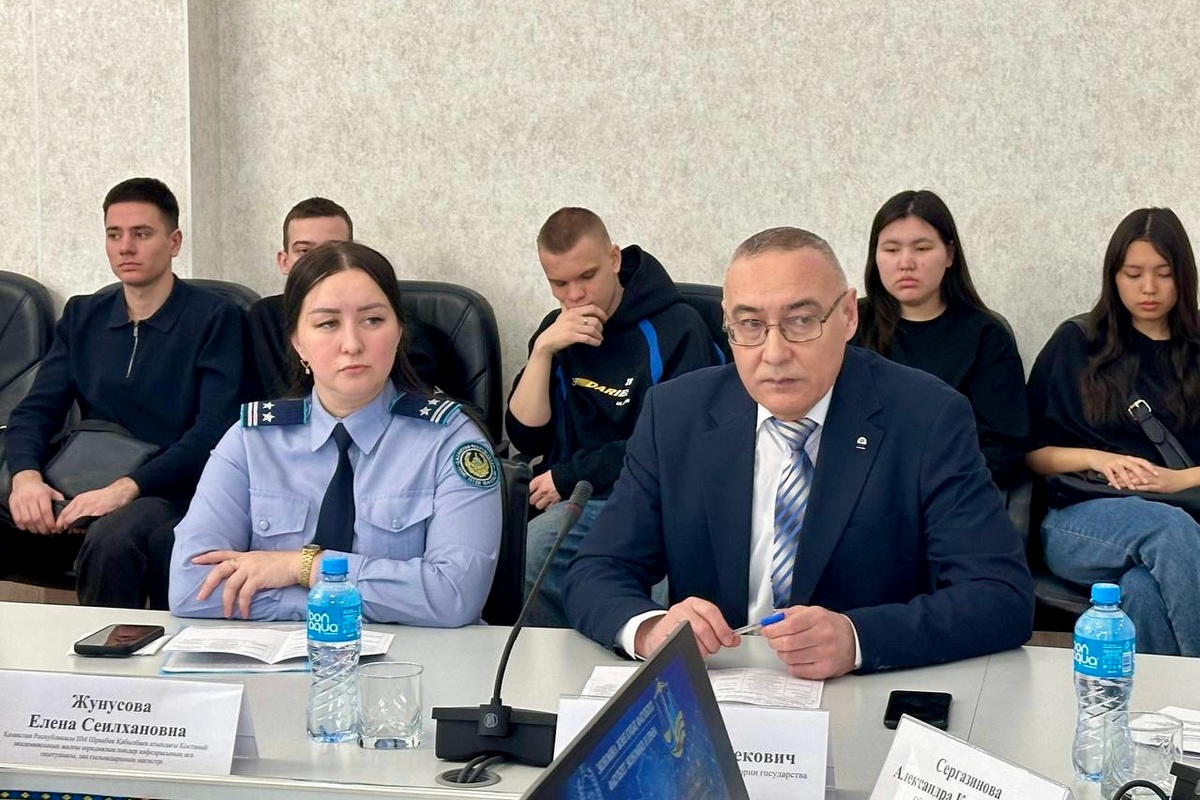
Elena Zhunusova, Senior Lecturer at the Department of General Legal Disciplines of the Kostanay Academy of the Ministry of Internal Affairs of the Republic of Kazakhstan named after Sh. Kabylbaev, presented a comparative analysis of the current Constitution and its draft version.
She highlighted the transformation of the public administration model and the development of the principles of a legal and social state. Her report demonstrated the evolutionary nature of the constitutional reform and its responsiveness to contemporary challenges.
Professor Zhanat Atzhanova of the Department of Law at the Kostanay branch of Chelyabinsk State University examined the draft Constitution as a progressive foundation for sustainable societal development.
Special attention was given to the social orientation of the state, the protection of individual rights, and institutional stability. According to the speaker, the constitutional changes create a solid foundation for the country’s stability and further development.
During the discussion, participants also addressed the importance of newly established consultative institutions. Particular emphasis was placed on the role of the Halyk Kenesi as the highest consultative council designed to ensure feedback between society and the state, consolidate public initiatives, and develop proposals on pressing issues of national development.
The updated parliamentary model — the Qurultay — was discussed as a new stage in the evolution of the representative system.
Participants noted that these institutional changes contribute to strengthening the principles of openness and transparency in public administration.
Constitutional modernization is regarded as a strategic step toward building a just, rule-of-law, and socially oriented state.