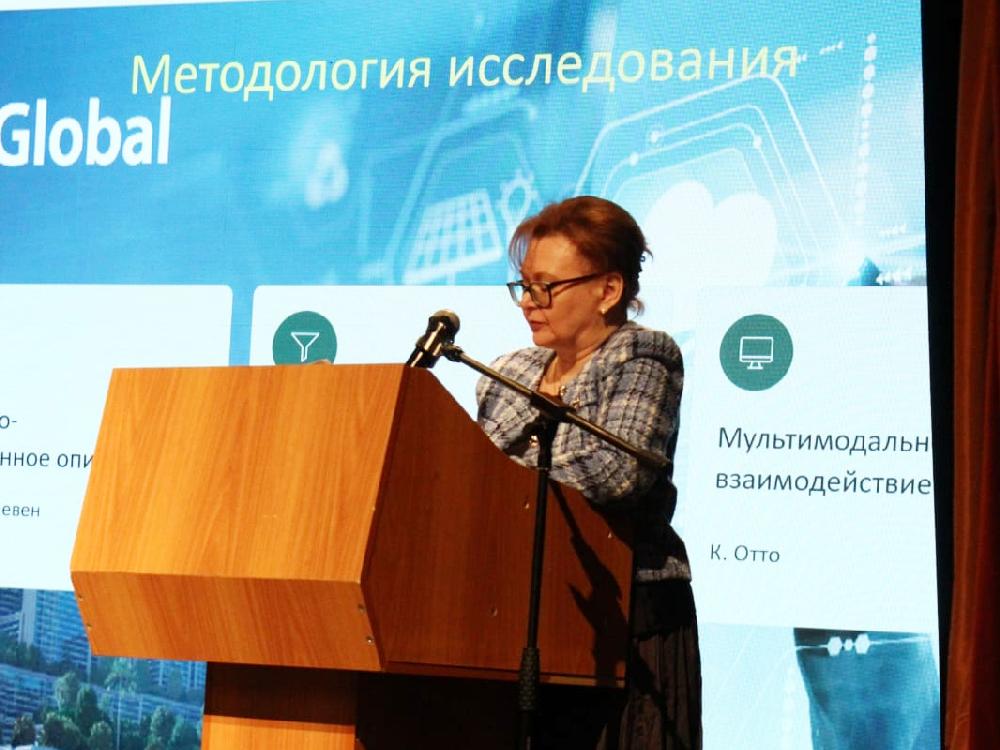
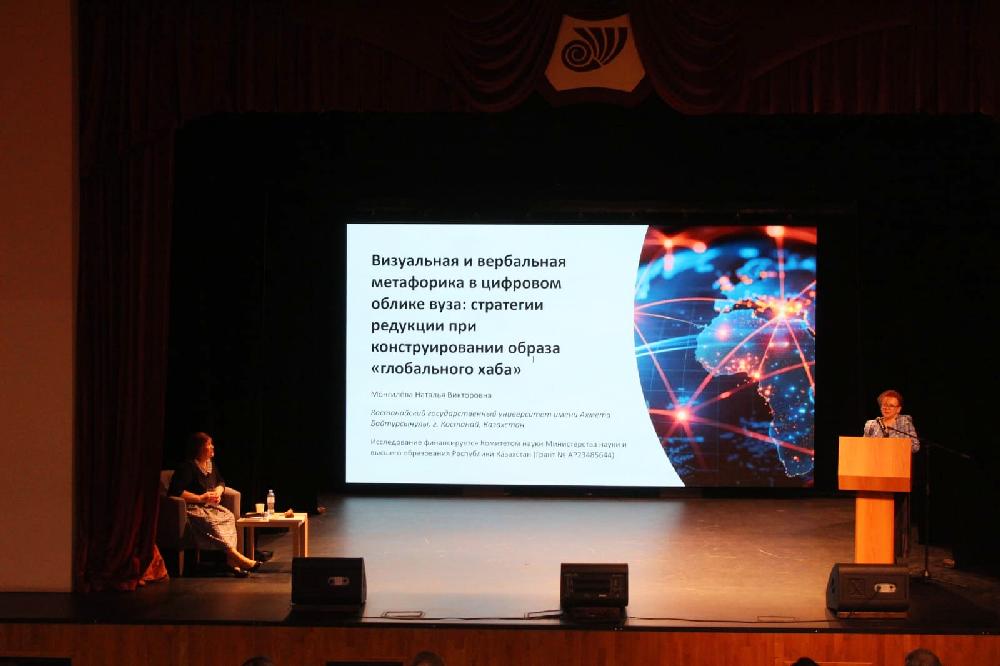
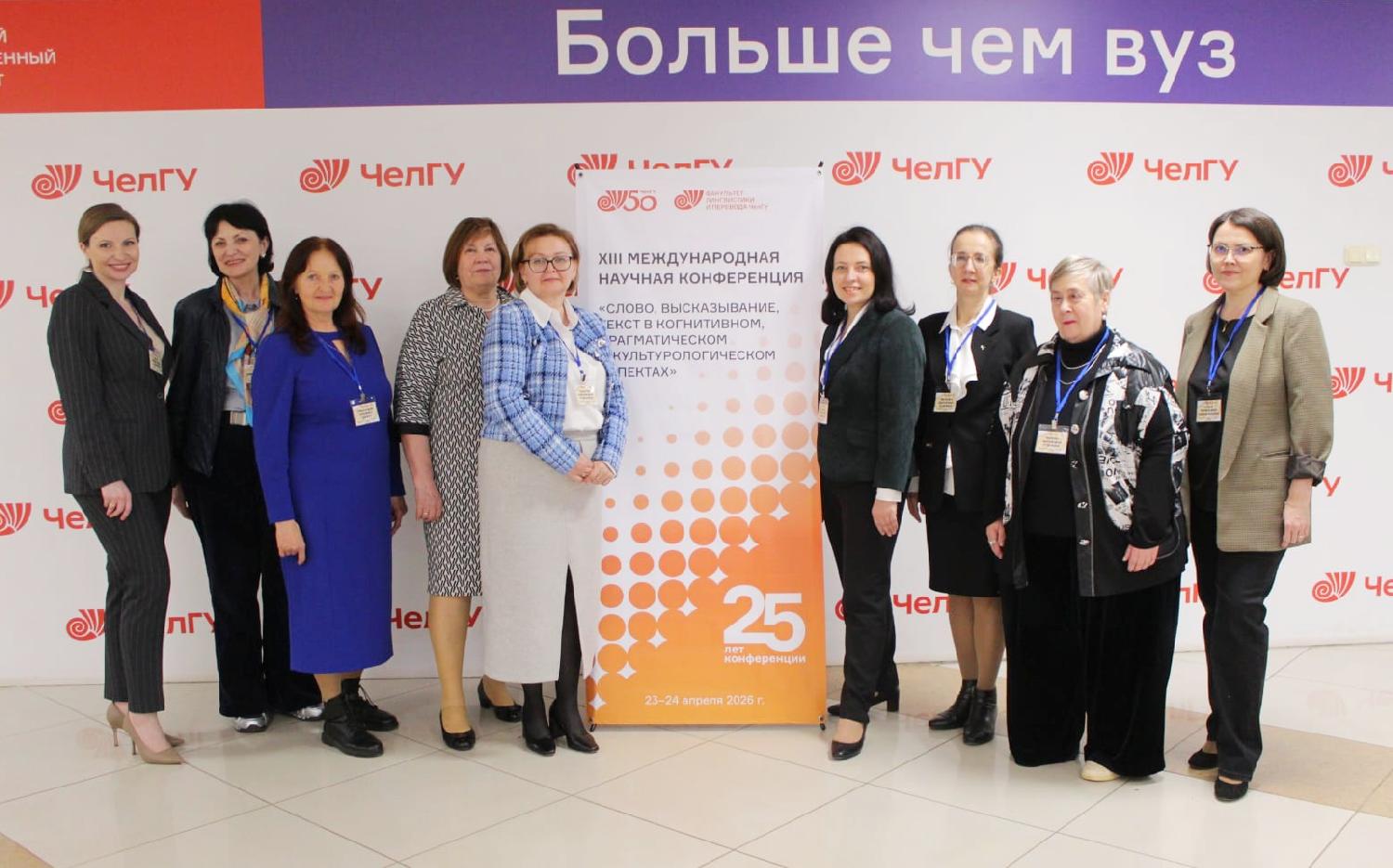
At the plenary session of the XIII International Scientific and Practical Conference “Word, Utterance, Text in Cognitive, Pragmatic and Linguocultural Aspects,” Doctor of Philology Natalia Mongilyova delivered a presentation on the mechanisms of constructing the “global image” of leading universities worldwide.
The study generated significant interest within the academic community due to its systematic approach and relevance.
Natalia Viktorovna presented the results of her research team, which includes KRU doctoral students Alena Tkalia, Yana Talybova, and master’s students of the “Foreign Philology” program.
Together, they are working on a grant project funded by the Committee of Science of the Ministry of Science and Higher Education of the Republic of Kazakhstan: “Enhancing the Attractiveness of a Kazakhstani University” (No. AP23485644).
Presentation topic: “Visual and Verbal Metaphor in the Digital Image of a University: Reduction Strategies in Constructing the ‘Global Hub’ Image.”
What makes the study unique?
The authors analyzed 125 multimodal cases (integrated “text + image” units) from the official websites of universities ranked in the QS Top 100 (2025).
The focus was on the “digital showcases” of the world’s leading universities.
The researchers demonstrated that, in the competition for talent, universities not only inform about their achievements but also construct a powerful visual myth of easy and seamless integration into the global academic space.
Particular interest was drawn to the research methodology based on formalized analytical metrics (the Christian Otto model).
The use of indicators such as semantic coherence and cognitive overlap of modes enabled the authors to objectively reveal mechanisms of audience attention manipulation.
By applying strategies of “metaphorical absorption,” universities communicate leadership and prestige through attractive imagery of futuristic architecture, high-tech interfaces, and psychological comfort.
The presentation received high praise from international experts.
Participants of the discussion highlighted the depth of critical discourse analysis, which revealed the “architecture” of perception management within the academic environment.
“We aimed to show that ‘globality’ on a university website is a carefully constructed ideological product. Discursive reduction simplifies complex academic meanings into easily consumable images. Our task as researchers is to develop critical visual literacy so that behind the glossy façade of a ‘global hub,’ one can see the real contours of academic relations,” Natalia Viktorovna noted in an interview.
The study’s findings make a significant contribution to the development of effective communication strategies aimed at enhancing the international attractiveness of Kazakhstani universities in a globally competitive environment.